Most people arrive at this comparison from one of two places: they are facing the loss of a full arch and deciding what comes next, or they already wear a conventional denture and want to understand fixed implant options.
A denture and a fixed implant arch solve the same visible problem in fundamentally different ways. The right choice depends on your health, anatomy, goals, and treatment plan.
What a conventional denture is
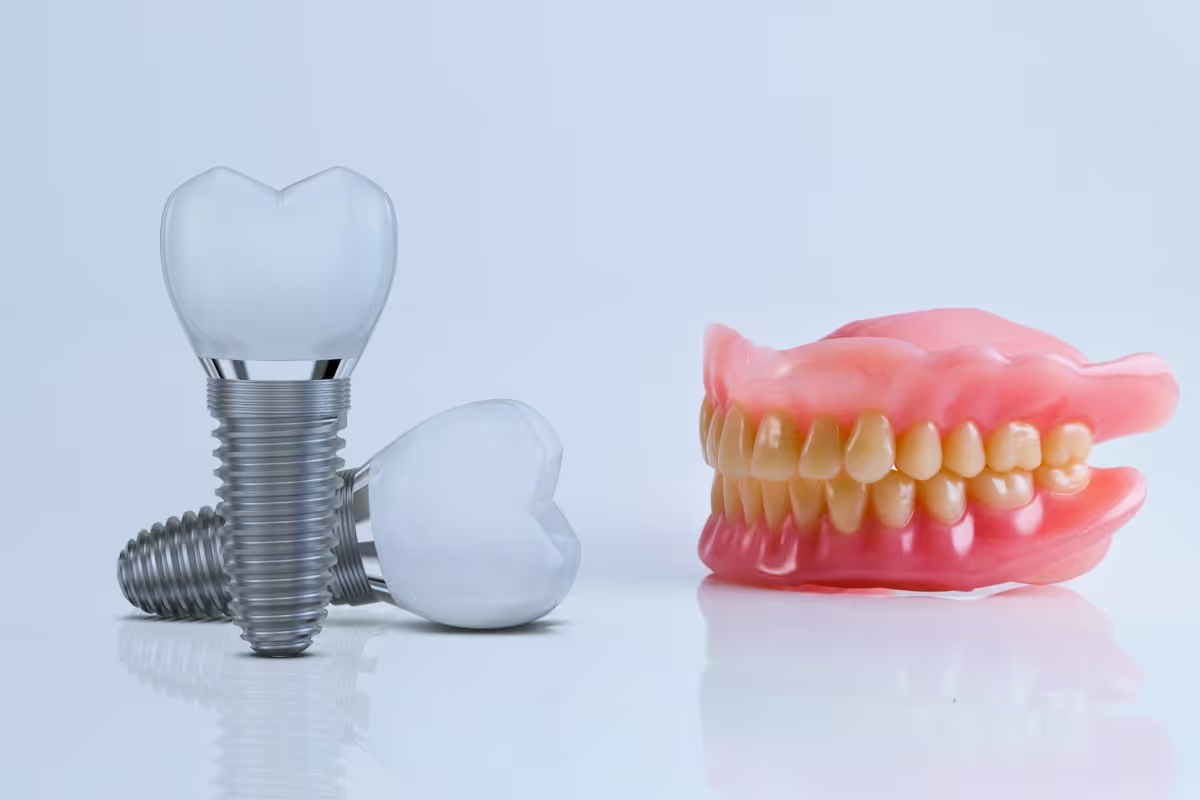
A full denture is a removable arch of teeth set in an acrylic base that rests on the gums. Dentures remain an appropriate option for many patients because they do not require implant surgery and generally have a lower initial cost.
The trade-off is that a conventional denture is removable and relies on the shape of the ridge, suction, and sometimes adhesive for retention. Fit can also change over time as the jawbone changes after tooth loss.
What All-on-X is
All-on-X replaces a full arch with a fixed restoration supported by dental implants placed in the jaw. The number and position of implants are determined from the patient's anatomy and restorative plan rather than from the treatment name alone.
At Restore, a straightforward zirconia full arch is $17,999 for either the upper or lower arch. More difficult or complex cases are priced appropriately after consultation and treatment planning. Additional procedures, when needed, are reviewed separately before treatment is scheduled.
Stability and function
A conventional denture rests on the gums and is removable. A fixed implant arch is supported by implants in bone and does not come out for routine daily cleaning. This difference affects stability, cleaning, speech, and the way each option feels during daily use.
Bone and treatment planning
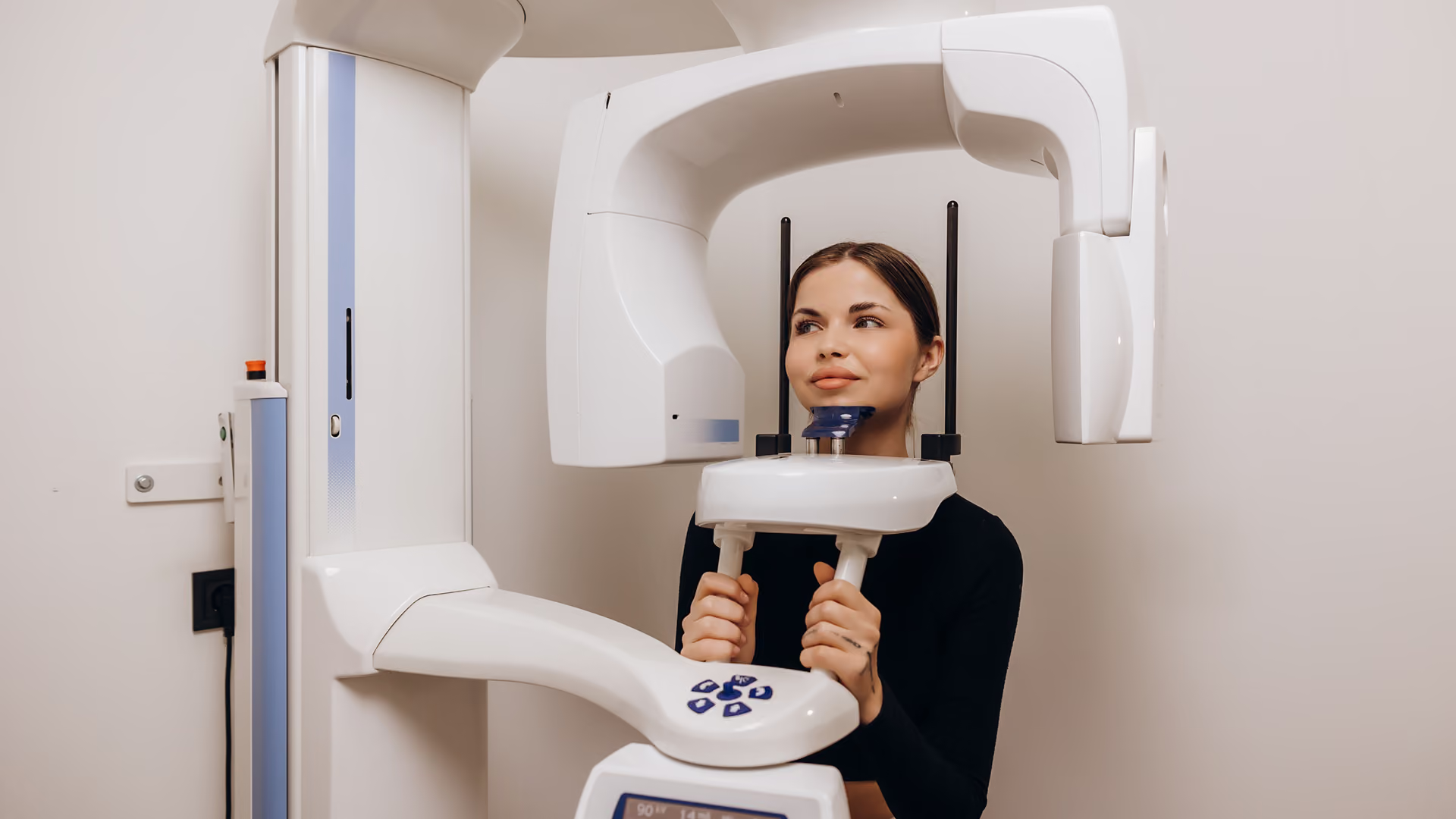
After teeth are lost, the jawbone can change over time. Implant treatment requires enough appropriate bone and careful evaluation of structures such as nerves and sinuses. A 3D CBCT scan allows the treatment plan to be based on the patient's actual anatomy.
Some patients may require bone grafting or other preparatory procedures before or during implant treatment. Those needs cannot be determined reliably from a photograph or a general online description.
Eating and the palate
A fixed implant arch is designed to provide stable function after healing. During the healing phase, dietary restrictions may be recommended while the implants integrate.
For the upper jaw, a fixed implant restoration may also leave the palate uncovered compared with many conventional full dentures. The exact design depends on the patient's restorative plan.
Time and cost
A conventional denture generally has a lower initial cost and does not require implant surgery. Implant treatment involves surgical and restorative phases and typically takes longer to complete.
The appropriate comparison is not only the initial fee but also the treatment goals, maintenance requirements, anatomy, and expected long-term care for each option.
Who may consider each option?
A conventional denture may be appropriate when implant surgery is not desired or appropriate, or when a removable solution better fits the patient's circumstances.
All-on-X may be considered by patients looking for a fixed full-arch solution and whose health and anatomy support implant treatment. A consultation and 3D scan are needed to determine whether a fixed implant plan is appropriate.
What decides the treatment plan?
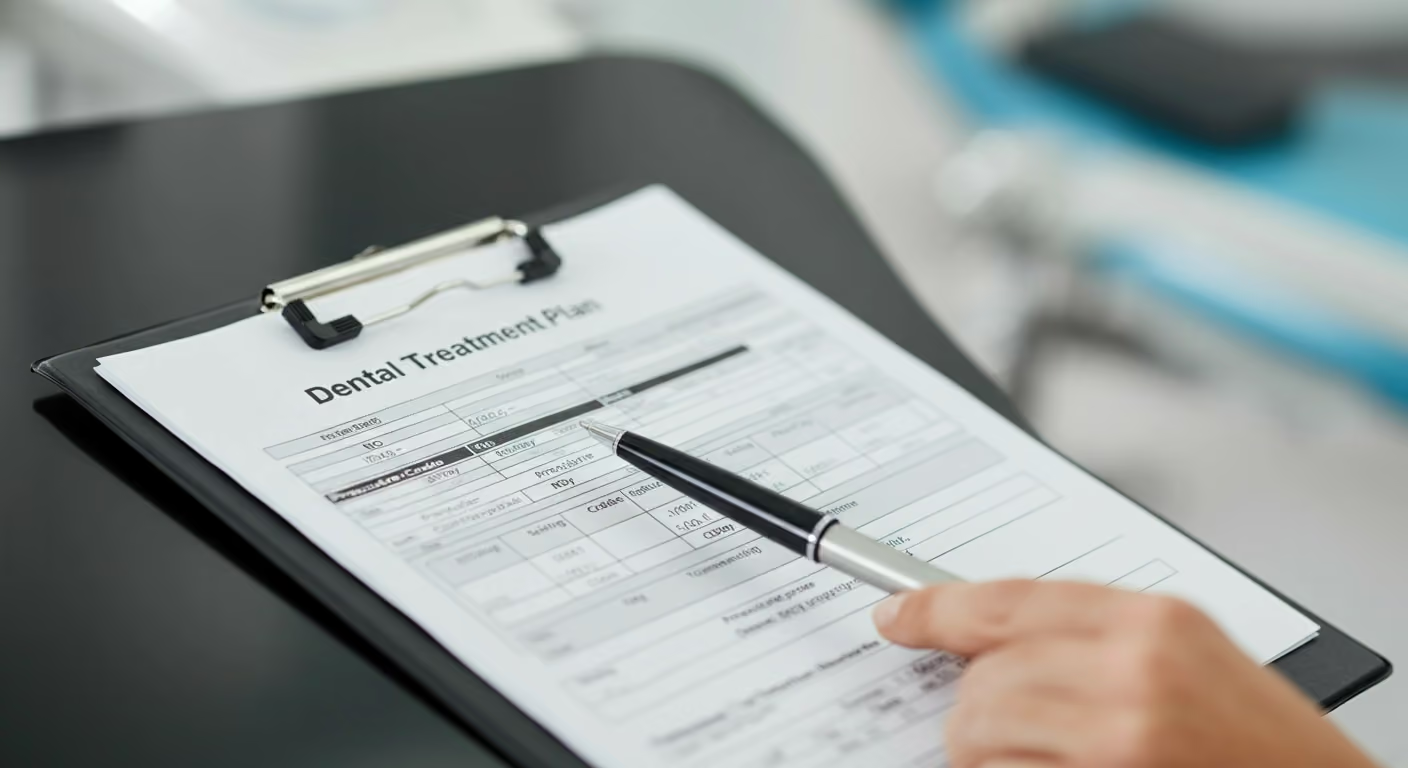
Your anatomy, health history, current dental condition, and goals all matter. At Restore, the consultation and 3D imaging are used to explain the appropriate options, treatment sequence, and costs before treatment is scheduled.