It is a specific kind of disappointment. You went in ready to finally do something about the gap, or the failing teeth, or the denture you have never got used to. You sat through the exam. And then you heard some version of: you don't have enough bone for implants.
Most people take that as the end of it. It usually is not.
Bone loss is one of the most common findings in implant dentistry, and it is one of the most routinely solved. The sentence "not enough bone" almost never means "never." It usually means "not yet, and not without a step first."
Why the bone disappeared in the first place
Your jawbone is not just a shelf that teeth sit in. It is living tissue that responds to being used.
Every time you bite, the root of a tooth transmits force into the bone around it, and the bone rebuilds itself in response. It is the same principle that makes exercise build muscle. The load is the instruction.
When a tooth comes out, that instruction stops. The bone that held it has nothing left to do, and the body, which is nothing if not efficient, begins reclaiming it. The process starts within months and continues for years. This is why a gap that has been there for a decade looks different on a scan than one from last spring, and why long-term denture wearers often have the least bone of all: a denture rests on the gums and transmits almost nothing into the bone underneath.
None of this is your fault, and none of it is unusual. It is what jaws do.
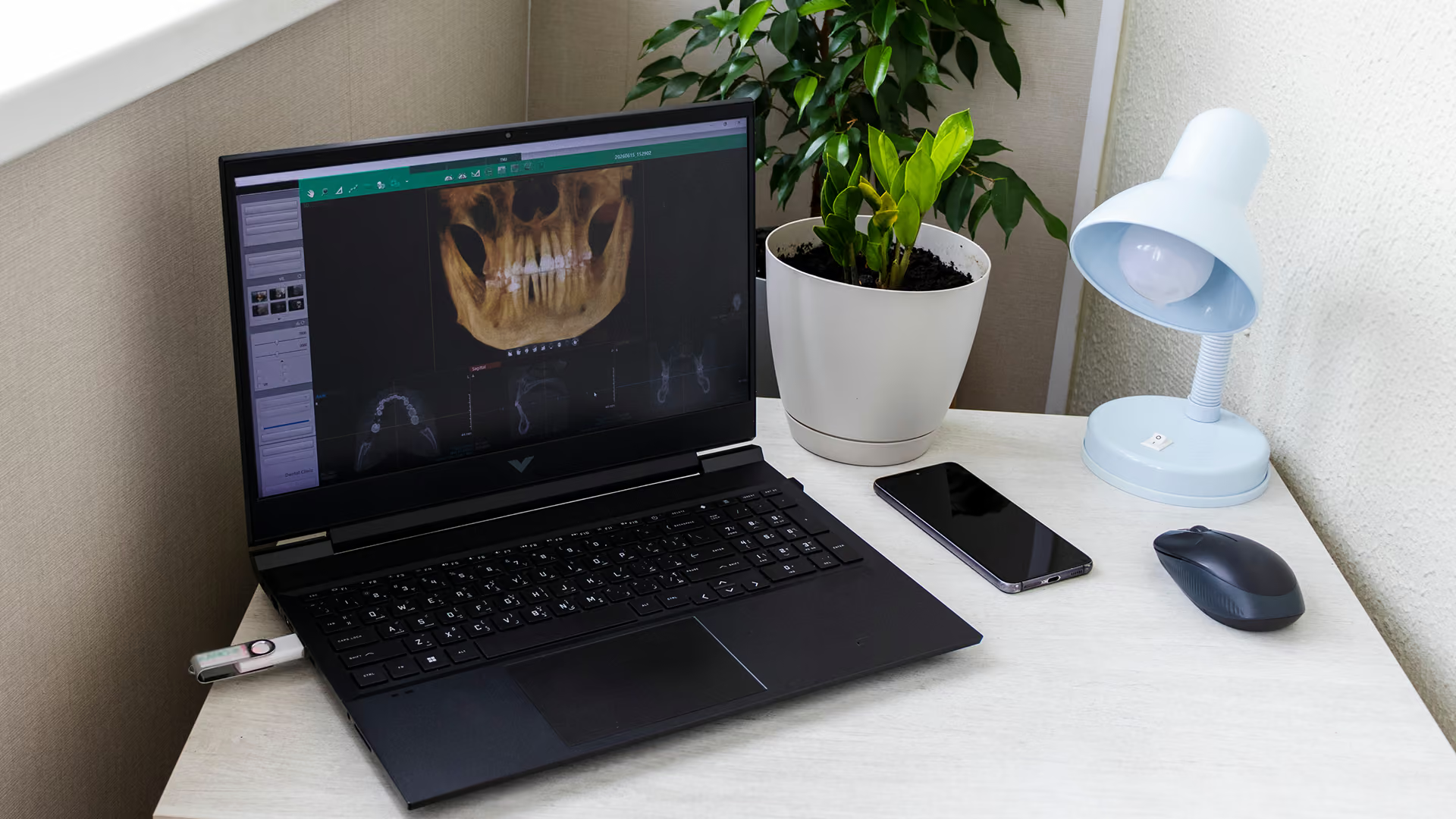
What a flat x-ray misses
Here is something worth knowing about the "no" you were given: it depends heavily on what it was based on.
An ordinary dental x-ray is a flat image. It shows height reasonably well and width not at all. But an implant needs both, and it needs to sit a safe distance from the nerve running through your lower jaw and the sinus sitting above your upper back teeth. Those distances are three-dimensional facts, and a two-dimensional image cannot give them to you.
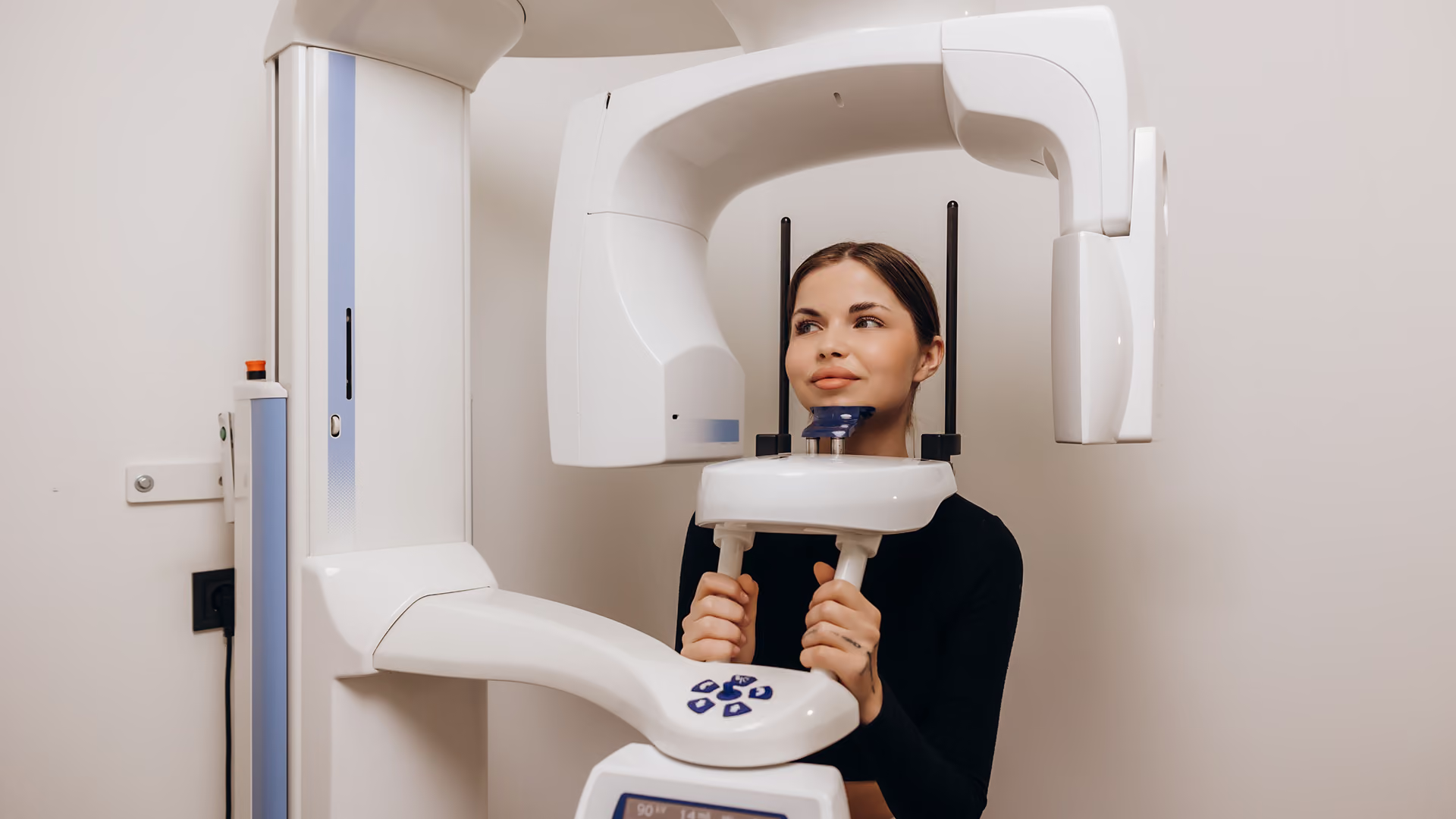
A cone-beam CT scan can. It builds a 3D model of your jaw and measures bone in every direction, showing exactly where the nerve runs, how far the sinus has expanded, and how much solid bone is actually available at each potential implant site.
Sometimes a CBCT confirms the earlier opinion. Often it finds usable bone that the flat image simply could not show, or shows that the deficiency is smaller and more fixable than it looked.
Bone grafting: rebuilding the foundation
When the bone genuinely is not enough, the most common answer is to build it.
Bone grafting places material where bone is thin or missing. That material acts as a scaffold, and over the following months your body gradually replaces it with your own living bone. What you end up with is not a filler sitting in your jaw. It is real bone, grown into the space, capable of holding an implant the same way natural bone does.
Grafts range from small to substantial. A modest one placed alongside an implant may add little to your timeline. A larger reconstruction heals first, over several months, and the implant follows once the new bone has matured.
There is one version worth planning for in advance: if a tooth is coming out and you already know you want to replace it, grafting material can go into the socket during the same appointment. It limits the bone loss before it happens, rather than treating it years later. Deciding early genuinely saves steps.
Sinus lifts: the upper back jaw problem
The upper back jaw is where "not enough bone" gets said most often, and for a structural reason.
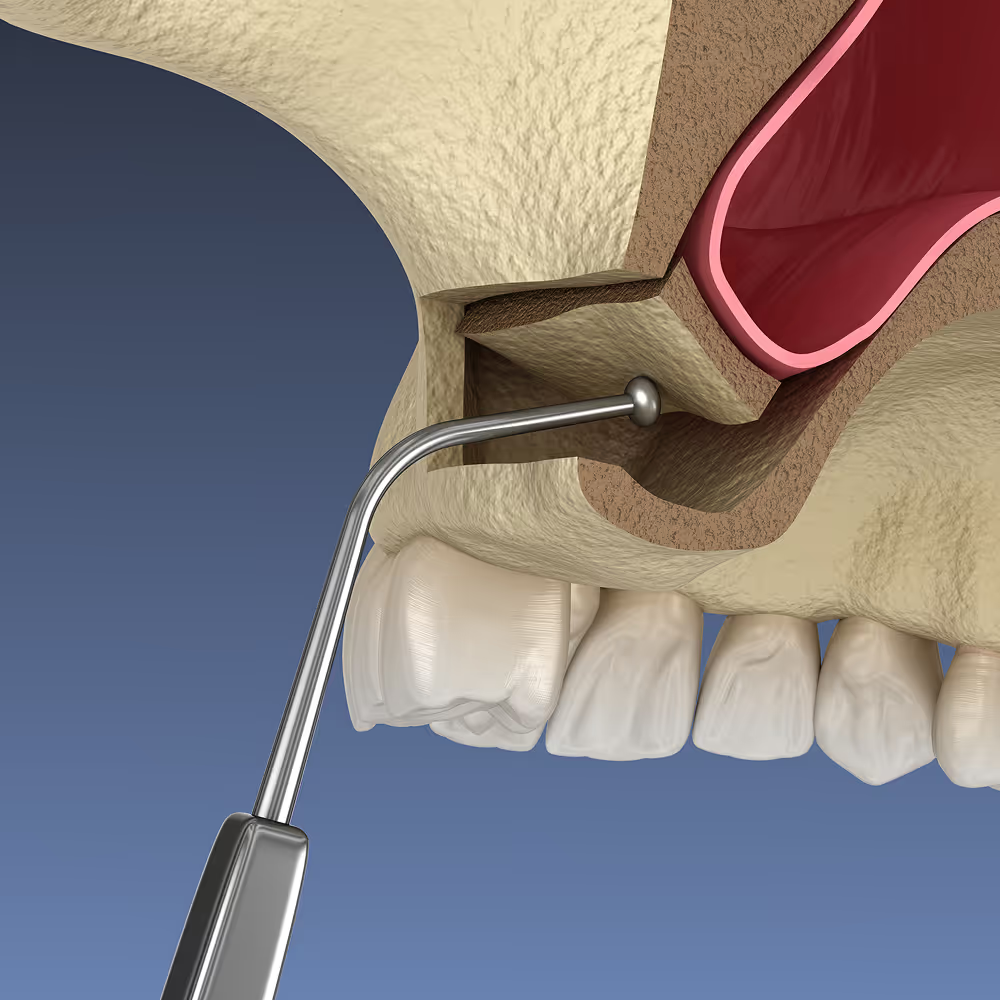
Your maxillary sinuses are air-filled spaces sitting directly above your upper back teeth. When those teeth are lost, two things happen at once: the bone shrinks from below, and the sinus expands downward into the space. What is left between them can be a few millimetres of bone, nowhere near enough to anchor an implant.
A sinus lift solves this. The sinus membrane is gently lifted upward and grafting material placed into the space beneath it. Over the following months that becomes solid bone, and the implant goes into it.
It sounds more dramatic than it is. It is a well-established, routine procedure, and planning it from a 3D scan means we can see the sinus and the membrane precisely before starting. Most people find the recovery involves some swelling and congestion for a few days rather than anything worse.
Sometimes you can work with the bone you have
Grafting is not the only route. For full-arch cases in particular, there is often a way to use what is already there.
All-on-X treatment angles the implants deliberately, positioning them to engage the denser bone that tends to remain toward the front of the jaw, away from the areas that shrink first. It is why a full arch of fixed teeth can be supported by as few as four implants, and why people who were told they had too little bone for a mouthful of individual implants often still qualify for a fixed arch.
Which route fits you is a question your scan answers, not a preference. Sometimes it is grafting. Sometimes it is angulation. Sometimes it is both.
When the answer really is no
Honesty cuts both ways, so: there are cases where implants are not the right call, at least not yet.
Uncontrolled diabetes, active gum disease, certain medications affecting bone metabolism, and heavy smoking all raise the risk of an implant failing. Smoking in particular has a measurable effect on how well implants integrate.
Most of these are conditions to manage rather than doors that close permanently. But a good implant dentist should tell you when your odds are poor, and should be willing to say so before taking your money, not after.
Getting a second look
If you have been told no, the useful next step is a scan and a conversation, not another opinion based on the same flat image.
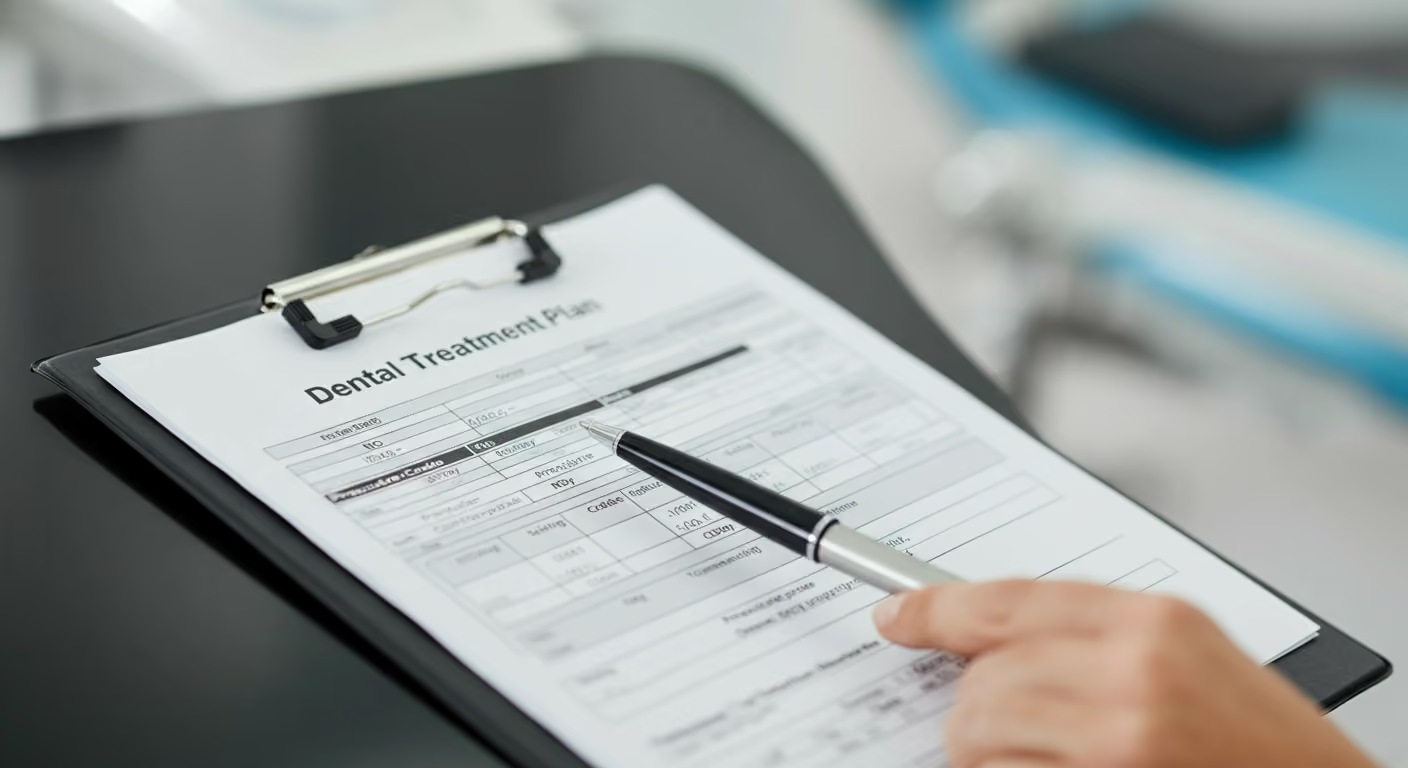
Bring the plan you were given. Bring the x-rays if you have them. At Restore, grafting and sinus lifts are done in-house as part of your implant plan rather than referred to a separate surgeon at another office, which means bone loss usually adds a step rather than a second practice and a second fee.
Your first visit is a cone-beam scan and an honest walk through what it shows, including the parts that are inconvenient. If the answer is still no, you will hear why, in plain language, with the scan on the screen in front of you.
Restore Dental Implant Studio is an implant-only practice in Las Vegas, founded by Dr. R.J. Guideng, a Diplomate of the American Board of Oral Implantology / Implant Dentistry who has been teaching implant surgery to other dentists since 2015.