Booking an implant consultation is an odd experience. You are agreeing to a conversation about a procedure you probably cannot describe, at a price you have only seen ranges for, with someone you have not met. Most people walk in with a vague sense that they are about to be sold something and no clear idea of what questions would protect them.
An hour of reading beforehand changes that entirely. Here is what is worth knowing before you sit down.
What an implant actually is
The word covers three separate things, and knowing that makes every quote you see easier to read.
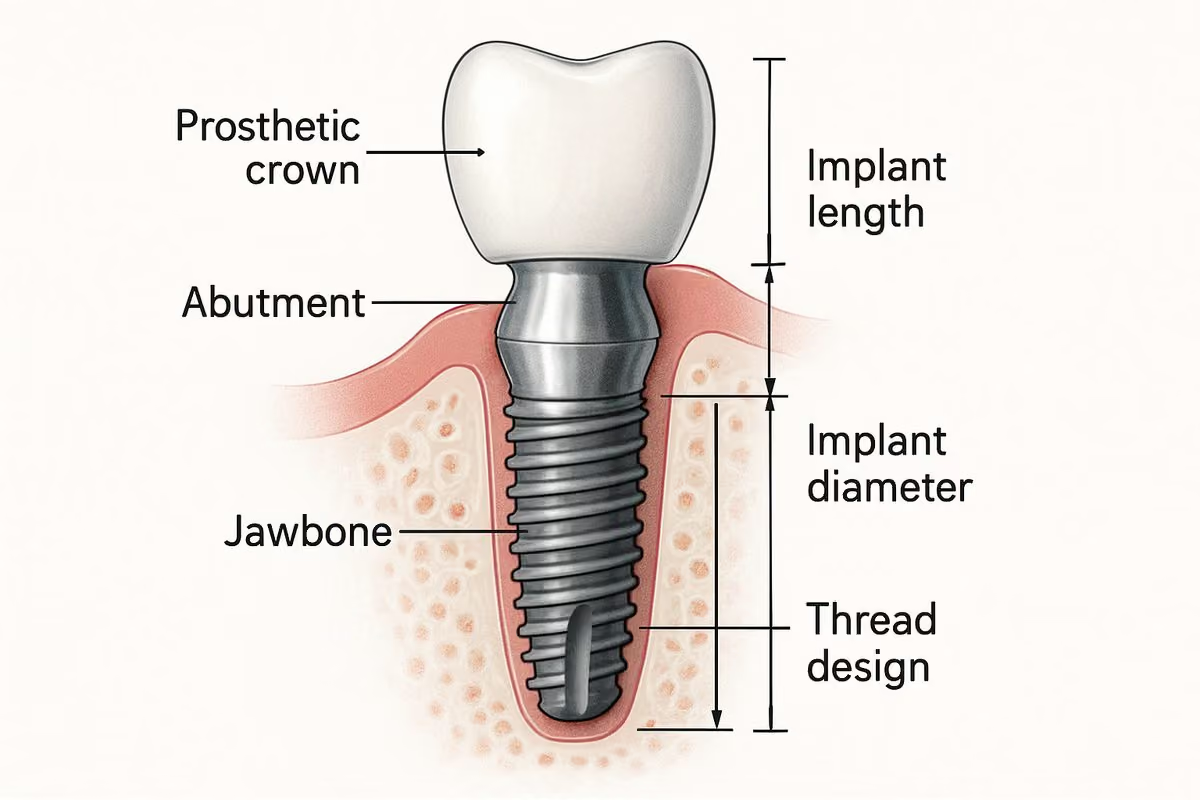
The implant is a small titanium post placed into your jawbone. It replaces the root of the missing tooth. You never see it.
The abutment is the connector that sits on top of the post and passes through the gum.
The crown is the tooth. It is the part you chew with and the part anyone looking at you sees.
Three parts, one finished tooth. This matters because quotes get built differently. A price advertising "implants from $1,200" is almost always describing the post alone. The abutment and crown arrive later, as separate items, and the finished tooth is a very different number. Neither figure was a lie. They were answers to different questions.
When you compare quotes, ask one thing: does this include the abutment and the crown? It flattens most of the confusion immediately.
Why it works at all
Implants rest on a piece of biology that is genuinely strange: titanium and living bone will bond directly to each other. Bone grows onto the implant surface and locks it in place, a process called osseointegration.
The implant does not sit in your jaw the way a screw sits in a wall. It becomes structurally continuous with the bone around it. That is why it can carry full biting force and why the honest answer to "how long will it last" is "potentially the rest of your life."
It is also why healing takes months rather than weeks, and why nobody can shortcut it. The waiting is the treatment.
Are you a candidate?
Most people are. The disqualifiers are narrower than the internet suggests.
Age is rarely the factor. There is no upper limit. What matters is general health and bone, and plenty of implant patients are in their seventies and beyond. The lower limit is real, though: the jaw needs to have finished growing.
Bone loss is common and rarely disqualifying. This is the single most frequent reason people believe they cannot have implants, usually because someone told them so based on a flat x-ray. Grafting and sinus lifts rebuild bone routinely, and angled implants can often use what is already there.
The genuine concerns are uncontrolled diabetes, active gum disease, heavy smoking, and certain medications affecting bone metabolism. Most are conditions to manage rather than doors that close. Smoking is the one with the clearest effect on whether an implant integrates, and it is worth an honest conversation rather than a quiet omission.
What the consultation should involve
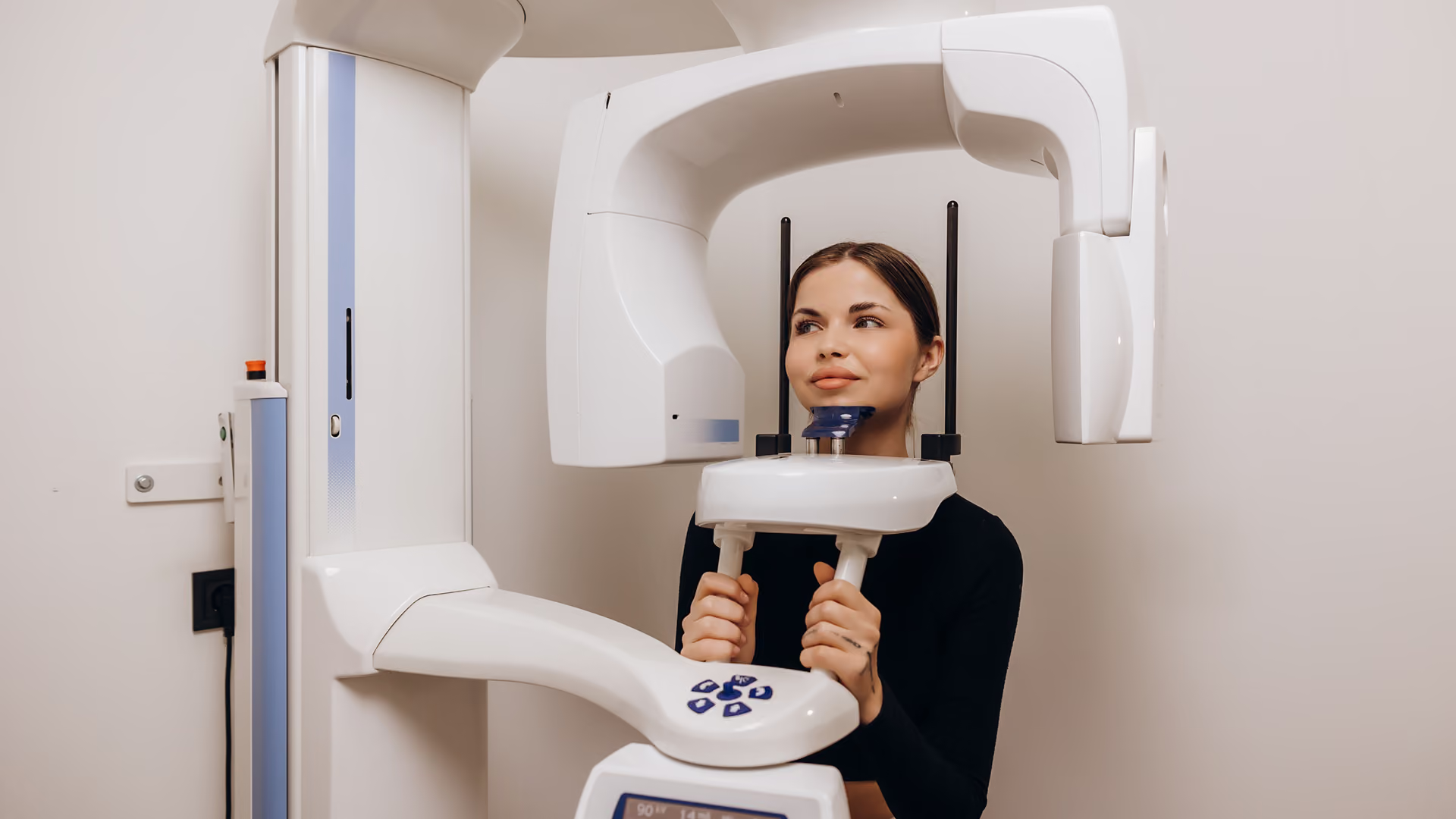
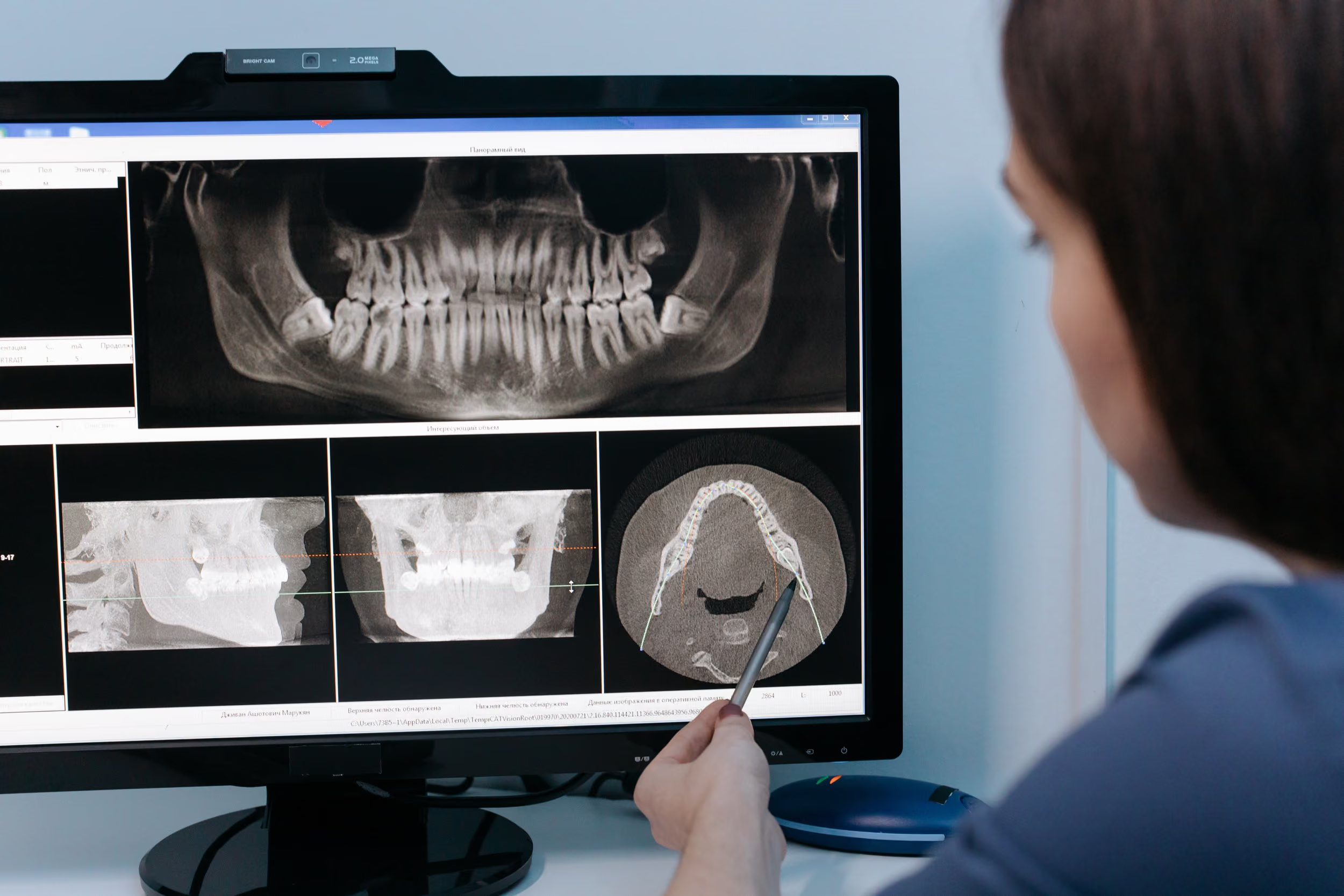
If a consultation does not include a three-dimensional scan, be cautious about what comes out of it.
An ordinary dental x-ray is flat. It shows height reasonably and width not at all, and an implant needs both, plus a safe distance from the nerve running through your lower jaw and the sinus above your upper back teeth. Those are three-dimensional facts.
A cone-beam CT builds a model of your jaw and measures all of it. It takes a few minutes. Everything downstream — whether you need grafting, how many implants, where they go, what it costs — comes from what that scan shows. A plan made without one is a guess dressed as a plan.
The scan should also come back to you. You should see it on a screen, with someone walking you through what the shapes mean, including the parts that are inconvenient.
Questions worth asking
These separate practices more effectively than any review.
"Who places the implant, and who makes the tooth?" In many practices these are different people in different buildings. Your scan is sent to a laboratory that has never met you, and if the fit needs adjusting it goes back and you wait. Not wrong, but worth knowing before you are inside the process.
"Does the price include the abutment and crown?" Covered above. Ask anyway.
"What happens if it fails?" Implants have high success rates, not perfect ones. A practice that has never considered the question is telling you something.
"Will you do the grafting, or refer me?" If bone work is needed and it gets referred out, that is a second office, a second fee, and a plan split across two people who are not in the room together.
"How many of these have you done?" Fair question, reasonably asked, and any honest practitioner will answer it directly.
What to bring
Nothing is required, but three things help.
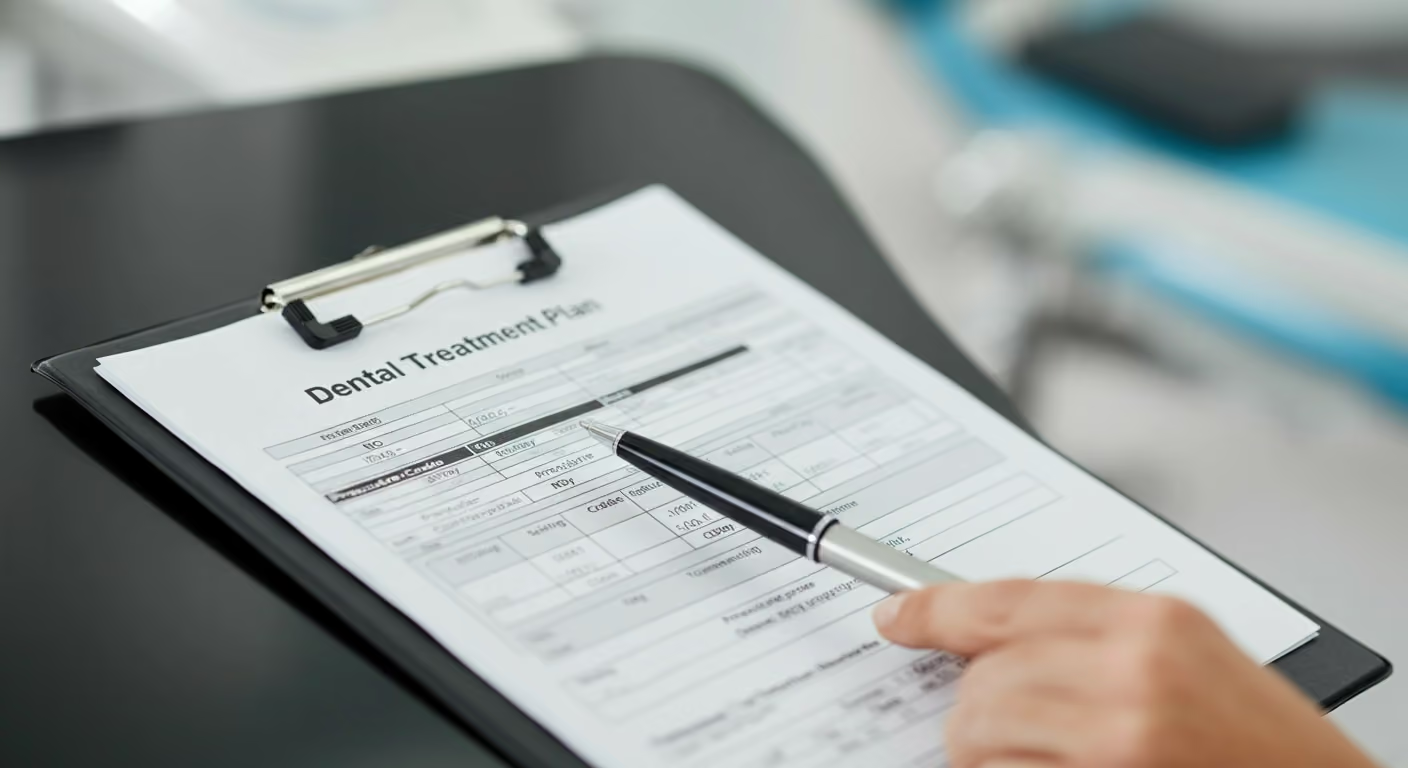
Any recent x-rays or a treatment plan from another dentist. Bring the opinion you were given even if it was a no, particularly if it was a no.
A list of your medications and medical conditions. This matters more than it sounds, especially if sedation may be involved or if you take anything affecting bleeding or bone.
Your questions, written down. People forget them in the chair, every time.
What will not happen
Setting expectations in the other direction: you will almost certainly not have treatment on the first visit. It is for diagnosis and planning. Treatment is scheduled once you have decided and know exactly what it involves.
You should also not be closing anything that day. You should leave with the options, what each costs, roughly how long each takes, and the freedom to go home and think. A decision this size deserves a week and a second conversation. Most people come back with better questions than they arrived with, which is exactly how it should work.
The timeline, roughly
For a single implant: the post is placed in one short appointment, then given a few months to fuse with the bone before the final crown is fitted. Three to six months total, most of it healing rather than chair time. A temporary can sit in the gap throughout, so you are not walking around with a visible space.
Full-arch treatment runs on a similar rhythm, and in many cases you leave the day of surgery with a fixed set of temporary teeth.
If grafting is needed first, add several months for the new bone to mature before the implant goes in.
The point of the visit
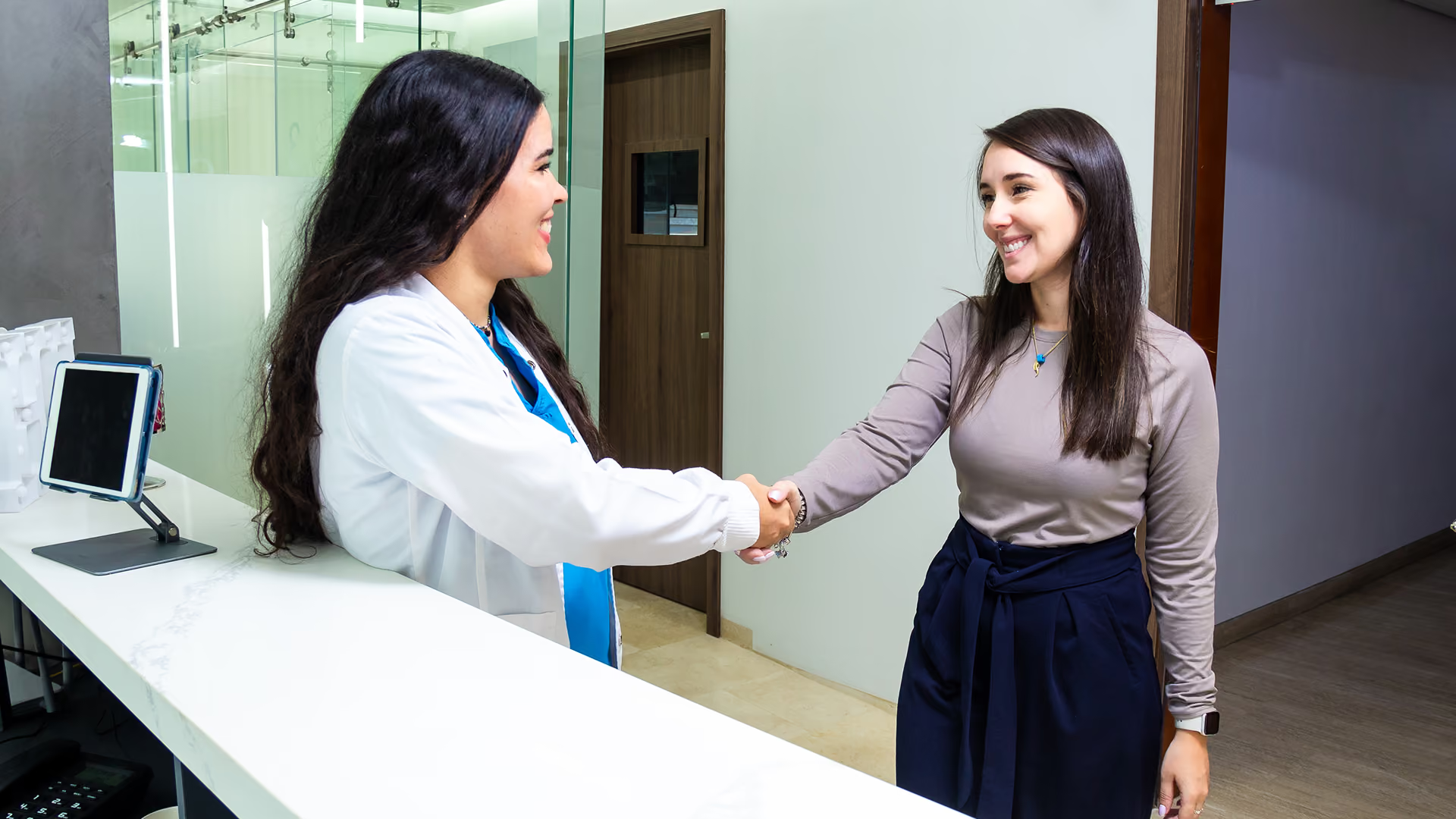
It is not to be sold. It is to find out what your jaw can support and what your options actually cost, from someone who has looked at your scan rather than a category you fall into.
Restore Dental Implant Studio is an implant-only practice in Las Vegas. Dr. R.J. Guideng is a Diplomate of the American Board of Oral Implantology / Implant Dentistry, has placed thousands of implants, and has been teaching implant surgery to other dentists since 2015. Planning, surgery, and the teeth themselves all happen in one building.