
Dental emergencies do not schedule themselves. They happen at a barbecue, on a Saturday night, in the ten minutes before a meeting. And they tend to arrive with a very specific kind of panic: you know something is badly wrong, you do not know how bad, and you have no idea whether the next hour matters.
Sometimes it matters enormously. Sometimes it does not matter at all and you can breathe. Knowing which is which is most of the battle.
Here is what to do, situation by situation.
A knocked-out tooth: this one is a clock
Of everything on this page, this is the one where minutes genuinely count.
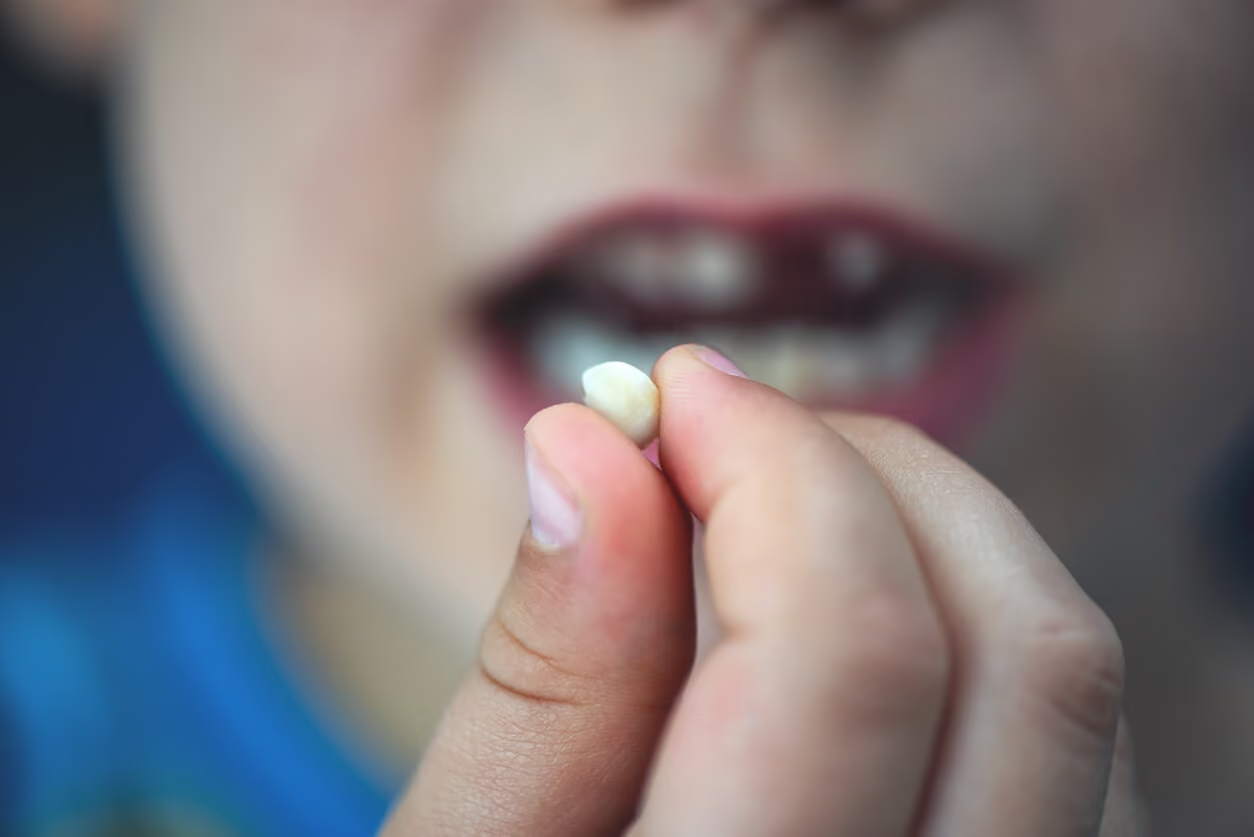
A tooth knocked out cleanly still has living cells on the root surface. Those cells are what allow it to reattach. They start dying almost immediately once the tooth is out of the socket and drying out, which is why the first thirty to sixty minutes carry most of the chance of saving it.
Pick it up by the crown, the chewing part you normally see. Not the root. The root is the part that matters and the part you are trying not to damage.
Do not scrub it. Not with a toothbrush, not with soap, not with your fingernail. If it is visibly dirty, rinse it briefly in milk or saline. Water is a last resort because it damages the root cells, and tap water more than most.
Try putting it back. If the tooth is whole and the socket is intact, gently push it back into place, the right way round, and bite softly on a clean cloth to hold it. This sounds alarming and it is the single best thing you can do. A tooth in its socket is in the environment it needs.
If you cannot, keep it wet. Milk is the best readily available option. Your own saliva works, so holding it inside your cheek is fine for an adult who is fully alert. Do not store it in water and do not wrap it in tissue, which dries it out fastest of all.
Then call. Bring the tooth.
A cracked or broken tooth
Less of a clock, but not something to sit on.
Rinse your mouth with warm water. If there is bleeding, press gently with clean gauze until it stops. A cold pack against the outside of your face helps with swelling. Take standard pain relief if you need it.
Save any pieces you find, and call.
The reason not to wait is that you cannot see the important part. A crack that looks like a chipped corner can run down into the root, and once bacteria reach the nerve you are into a different, more expensive problem. A crack that is caught early sometimes stays a small repair. The same crack a month later often does not.
Severe pain and swelling: know the difference
This is where people most often misjudge, in both directions.
Toothache that has been building for days, that throbs, that wakes you at night, usually means infection has reached the nerve. It is urgent, but it is dental urgent.
Facial swelling is a different category. If swelling is spreading across your face or into your neck, if you have a fever, if it is becoming difficult to swallow or open your mouth properly, or if breathing feels affected, that is not a dental appointment. That is an emergency room, now. Infections in the floor of the mouth and neck can move fast and become dangerous in a way toothache does not.
The rule worth remembering: pain is a dentist, spreading swelling with fever is a hospital.
An implant that feels loose or painful
Do not wait this one out.
A healed implant should not move, and it should not hurt. If yours does, something is happening around it, and the thing that is usually happening is bone loss. Bone that is lost around an implant does not come back on its own.
Early attention often means the difference between a manageable fix and losing the implant and the bone it was sitting in. Call and describe exactly what you are feeling: whether it moves, whether it is painful to bite on, whether the gum around it is tender or bleeding.
A lost crown, filling, or broken denture
Uncomfortable, rarely dangerous.
Keep the crown if you find it. Do not glue it back with anything from a hardware store, and do not use household adhesive of any kind. Pharmacy temporary cement is acceptable for a day or two. Chew on the other side.
A broken denture is the same story: do not repair it yourself. Superglue is not biocompatible, it makes a proper repair harder, and it sometimes makes it impossible.

What not to do
Do not put aspirin on the gum. This one refuses to die. Aspirin is acidic and burns the tissue it touches. It works through your bloodstream, not by contact. Swallow it.
Do not apply heat to a swelling. Heat encourages infection to spread. Cold is what you want.
Do not wait for it to settle by itself. Toothache that stops on its own is not usually good news. It often means the nerve has died, and the infection is still there, quietly, doing the same work without the alarm.
Do not take someone else's antibiotics. Leftovers from a previous course are the wrong drug at the wrong dose for the wrong length of time, and they can mask the problem while it worsens.
What happens once you are seen
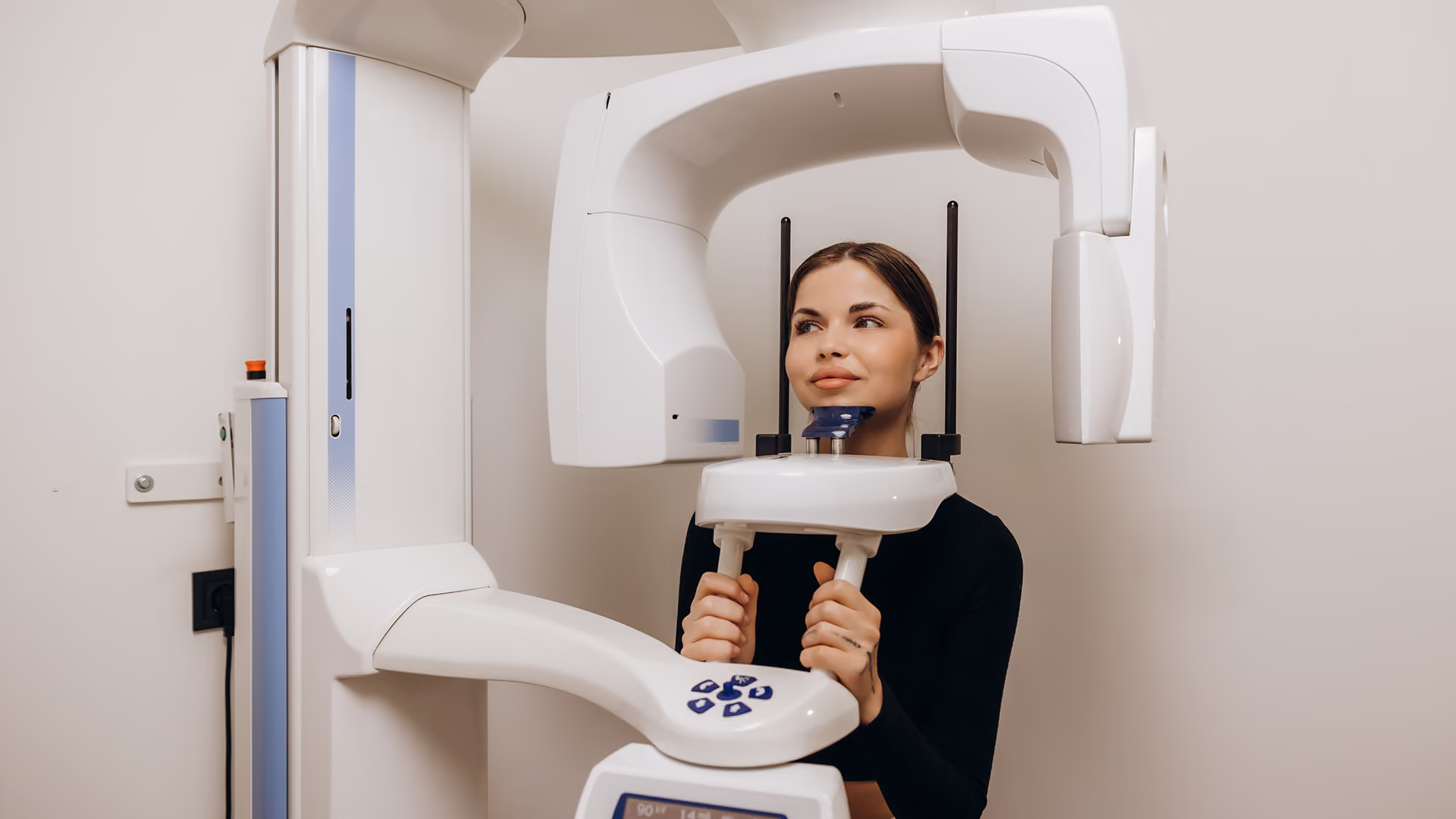
The first job is finding out what is actually going on, which usually means a scan. Most dental emergencies are happening beneath the surface, in the root or the bone, where an examination alone cannot reach.
The second job is relieving the immediate problem: draining an infection, removing a tooth that cannot be saved, stabilising what can be.
The third is the part that gets skipped elsewhere and is worth asking about: what happens next. If a tooth has to come out and you will want to replace it, how it comes out matters. Removing it gently to preserve the surrounding bone, and often placing grafting material in the socket during the same visit, keeps the site ready for an implant later. Done in a hurry without that in mind, you can spend the next year rebuilding what a careful extraction would have kept.
Where Restore fits
Restore focuses on the urgent problems that sit within implant dentistry: teeth that need removing, sites that need stabilising, and implants that need attention. Because diagnosis, surgery, and restoration all happen in one building, an urgent extraction can be planned with your next step in mind rather than treated in isolation.
If something has happened, call us as early as you can and describe it. Even before you are in the chair, knowing what you are dealing with changes what you should do in the next hour.
Restore Dental Implant Studio, Las Vegas. Call (725) 255-3055.